
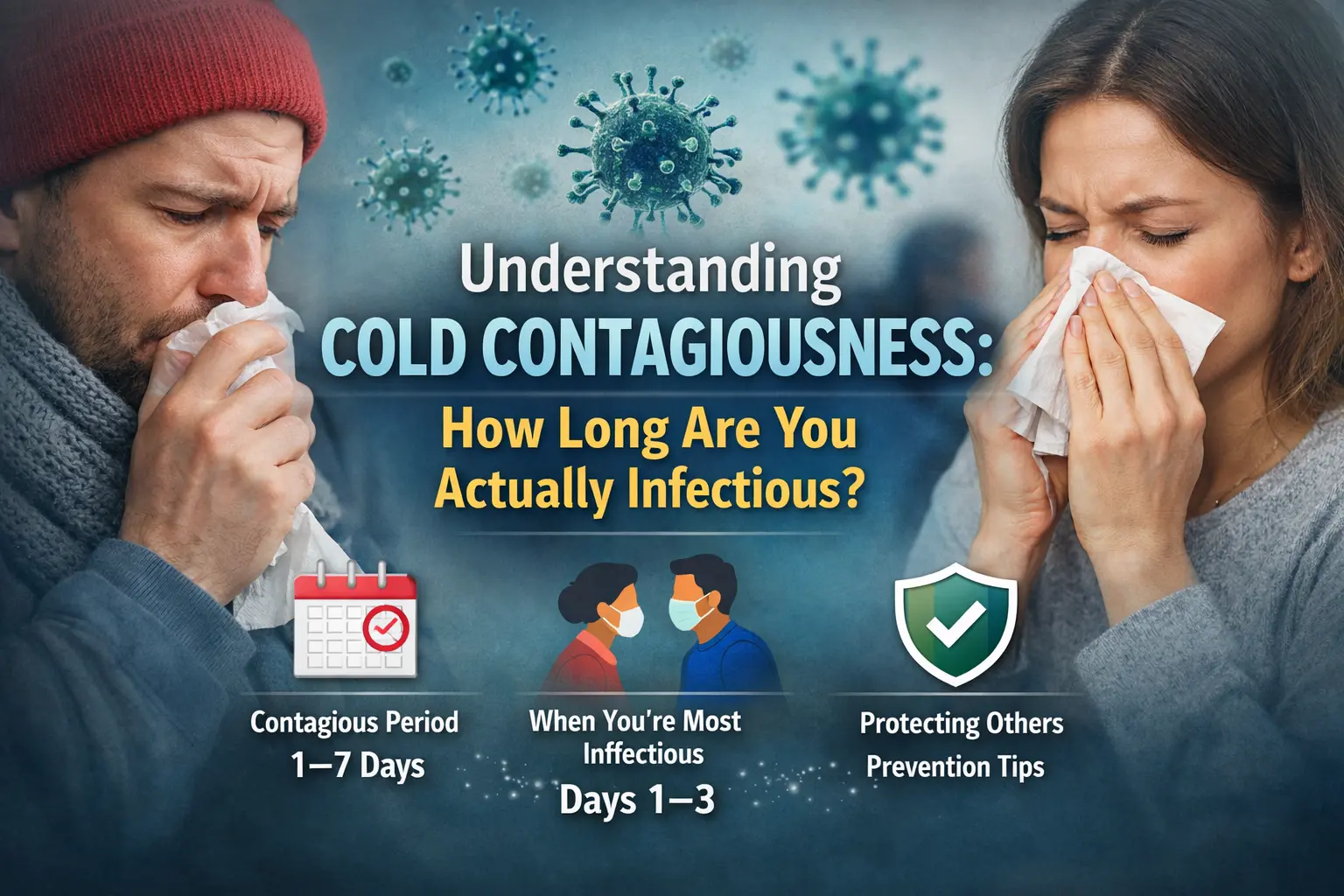
The common cold is one of the most pervasive viral illnesses worldwide. Its contagious nature often raises concerns about how long someone remains infectious, especially when trying to prevent its spread among family members, coworkers, and vulnerable individuals. Understanding the timeline of infectiousness can help in mitigating the risk of transmission.
What Is the Common Cold?
Primarily caused by rhinoviruses, the common cold can also stem from viruses like coronavirus and RSV. It is a mild yet highly contagious infection spread through droplets in the air, physical contact, or touching contaminated surfaces. The virus thrives during fall and winter due to lower humidity and increased indoor gatherings.
Cold Symptoms and Signs to Watch For
- Sore throat
- Stuffy or runny nose
- Sneezing
- Mild headache
- Cough
- Fatigue
- Mild fever (in some cases)
A quick comparison between cold and flu symptoms includes fever and aches being more severe in flu cases. Improvements in symptoms usually suggest recovery, while worsening symptoms might require medical attention.
Stages of a Cold
Incubation Phase (1–3 days)
- The virus enters the body quietly, making you contagious even before you experience any symptoms.
Onset Phase (Day 1–2)
- Initial symptoms like a scratchy throat and sneezing signal the beginning of the infection.
Peak Illness (Day 3–5)
- This phase typically has the worst symptoms, including congestion, cough, and low-grade fever.
Recovery Phase (Day 6–10)
- Symptom relief, while fatigue may linger, denotes recovery. Look for signs such as improved appetite and energy.
How Long Is a Cold Contagious?
People with a cold are most contagious 1–2 days before symptoms manifest, extending to 3–5 additional days. In some cases, particularly among children and immunocompromised individuals, the contagious period can last up to 10 days. It is noteworthy that a cold sore, caused by HSV-1, remains contagious from the first tingle until crusting.
How the Cold Spreads
- Droplets in the air from coughs or sneezes
- Direct contact, like handshakes or hugs
- Touching shared surfaces such as doorknobs
Treatment and Self-Care for the Common Cold
While no cure exists, symptoms can be relieved through:
- Over-the-counter medications like decongestants
- Plenty of rest and hydration
- Saline nasal sprays
- Warm fluids and throat lozenges
Antibiotics are ineffective against viral infections such as the cold.
Signs Your Cold Is Getting Better vs Getting Worse
Getting Better
- Less congestion and reduced fatigue
- Return of appetite and improved sleep
Getting Worse
- Fever exceeding 101°F
- Persistent cough
- Potential sinus infection indicated by facial pain
- Shortness of breath, possibly suggesting pneumonia
How to Prevent the Spread of a Cold
- Frequent hand washing
- Avoid touching the face
- Covering coughs and sneezes
- Staying home when sick
- Disinfecting frequently touched surfaces
When to See a Doctor
If cold symptoms persist beyond 10 days, or if you experience a high fever or symptoms that improve only to worsen again, it might be time to contact us for a consult at our Primary Care Clinic.
Conclusion
The common cold is contagious before symptoms appear and continues for several days. The best defense is self-care and social distancing while infected. If you are uncertain whether your illness is something more serious, like the flu, schedule a visit with our Primary Care Clinic for personalized care.
FAQs
Q1. How long is a cold contagious in adults?
Adults are most contagious 1–3 days after symptoms start and may remain so for up to 7 days.
Q2. Is pneumonia contagious like a cold?
Some types of pneumonia are contagious; a medical exam can determine the cause.
Q3. How long is a cold sore contagious?
A cold sore is contagious from the first tingle to full healing, often 7–10 days.
Q4. How long does a cold last?
Most colds last 7–10 days, with severe symptoms on days 3–5.
Q5. What are the signs your body is fighting a cold?
Indicators include reduced fatigue, lowered fever, and a return of appetite.